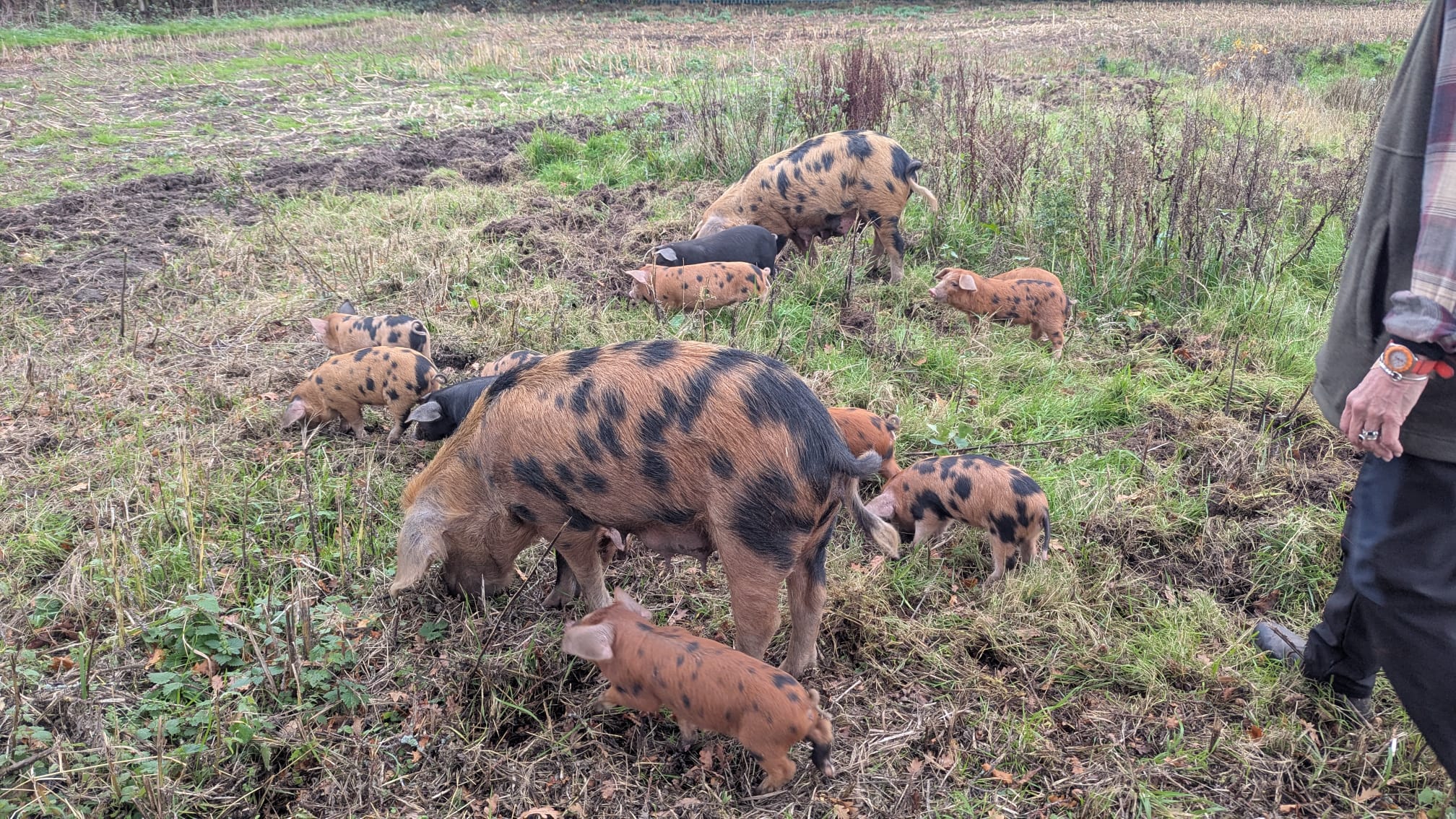
All Owl Farm pigs are raised on 16 acres of pasture in Crewe, Cheshire — outdoors year-round, with no antibiotics and no growth promoters. Our farm holds a 5-star food safety rating.
Heritage breed pigs are slower-growing breeds. Where commercial pigs are often slaughtered at 16–20 weeks, our Large Blacks and Oxford Sandy & Blacks take longer to mature — and that time shows in the flavour.
The intramuscular fat (the marbling running through the meat) is more evenly distributed. The fat cap on the skin side is deeper and more flavourful. And because our pigs root, wander, and graze on pasture, they develop proper muscle tone rather than the soft, watery texture that can plague intensively reared pork.
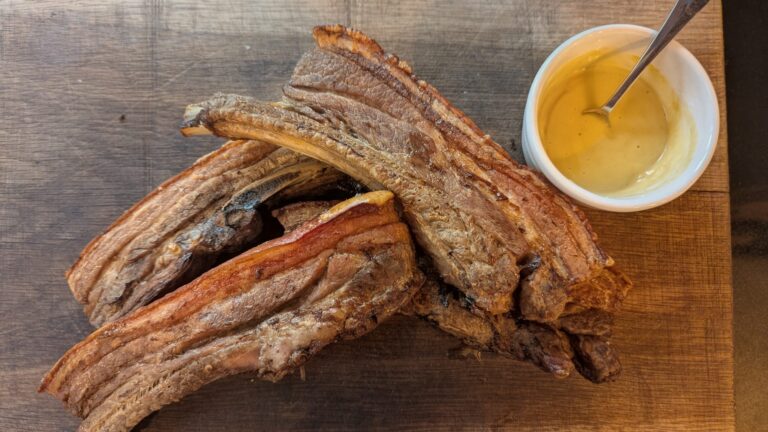
The result: pork belly that crisps properly, stays moist in the middle, and actually tastes like pork should.
If you’ve picked up a belly from us at Nantwich Market on a Thursday or Saturday, or through our local delivery rounds on Mondays and Wednesdays, this is the recipe that does it justice.
Slow-Roasted Heritage Pork Belly with Fennel and Sea Salt
Serves: 4–6 Prep time: 15 minutes (plus overnight drying if possible) Cook time: 3.5–4 hours
Ingredients
- 1.2–1.5 kg Owl Farm heritage breed pork belly, skin on and scored
- 2 tsp flaky sea salt (Maldon works beautifully)
- 1 tsp fennel seeds, lightly crushed
- 1 tsp black pepper, coarsely ground
- 4 garlic cloves, skin on, lightly crushed
- A glass of dry cider or white wine
- A little water or light stock for the roasting tray
Method
1. Dry out the skin (the crackling secret) If you can, unwrap your pork belly the night before and leave it uncovered in the fridge, skin side up. This dries out the skin and makes crackling dramatically easier. Even two hours uncovered before cooking helps.
2. Score and season Score the skin in close lines — about 1cm apart — cutting through the skin but not deep into the fat. Mix the sea salt, fennel seeds, pepper, and thyme, then rub generously all over, working the seasoning well into the scored lines.
3. Start low and slow Preheat your oven to 150°C (fan 130°C / Gas 2). Place the garlic and onion halves in the base of a roasting tray to act as a trivet. Sit the pork belly on top, skin side up. Pour the cider and a splash of water or stock around (not over) the meat. Cover tightly with foil.
Roast for 2.5–3 hours. The low heat renders all that beautiful heritage fat and keeps the meat tender.
4. Blast for crackling Remove the foil, turn the oven up to its maximum (220–240°C / Gas 9), and roast uncovered for a further 25–35 minutes until the skin is deeply blistered and properly crackling. Keep an eye on it — heritage fat renders faster than you might expect.
5. Rest, then carve Rest the joint for 10–15 minutes before carving. Serve with roasted root vegetables, sharp apple sauce, and good bread to mop up the juices.
A Word on the Fat
Don’t trim it. Don’t be alarmed by it. Heritage breed pork belly fat is a different thing entirely to the greasy, tasteless fat you might associate with supermarket pork. It’s rich, sweet, and carries the flavour of everything our pigs have been eating — grass, roots, fresh air, and time.
Rendered slowly, it bastes the meat from the inside out. Blasted at the end, it crisps into some of the best crackling you’ll ever taste.
It’s the reason chefs seek out rare breed pigs UK-wide. And it’s why once you’ve cooked with properly raised, pork, it’s very hard to go back.
Where to Find Our Pork Belly
You can find Owl Farm pork belly — and our full range of heritage breed cuts — at:
- Nantwich Market — every Thursday and Saturday, town centre
- Treacle Market — monthly in Macclesfield