
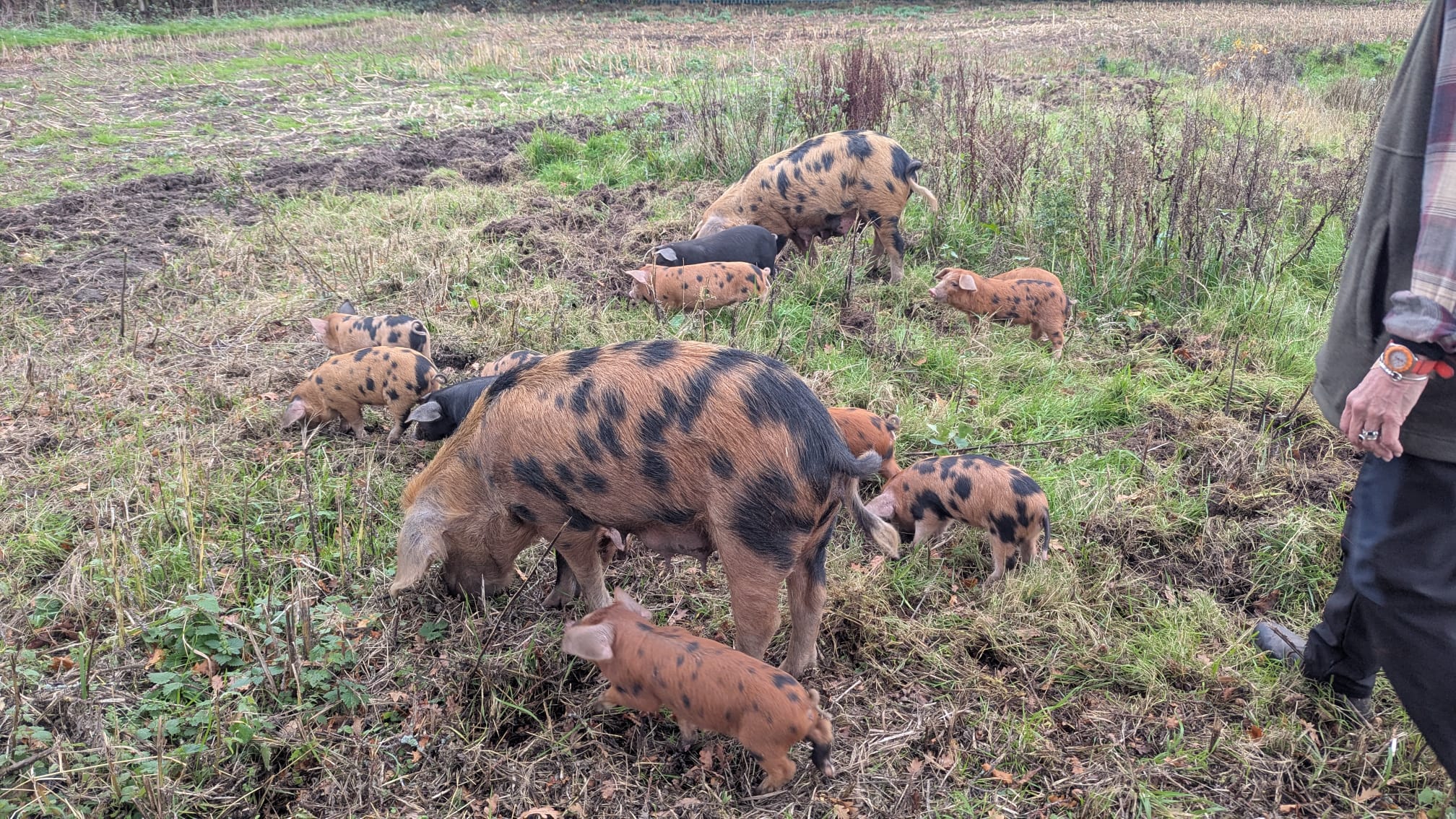
Why Owl Farm Sausages and Bacon Taste Different — And Why That Matters
There’s a moment that happens at Owl Farm’s stall at Nantwich Market. A customer picks up a pack of sausages,
Rope Ln, Crewe CW2 6RQ
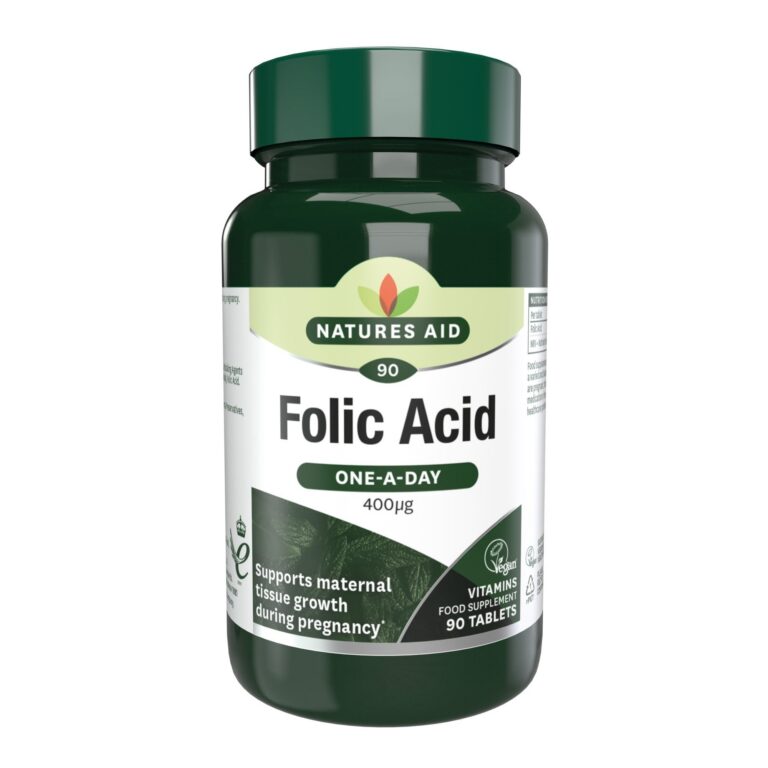
Why Is Folic Acid Going Into Our Bread — and What Does That Say About Modern Food?
A customer asked us recently whether we could source bread without folic acid added. It’s a fair question, and the honest answer is no — since September 2024 it’s been a legal requirement in the UK that non-wholemeal wheat flour must be fortified with folic acid.
That got me thinking. Why are we adding a synthetic vitamin to a staple food that humans have been eating for thousands of years? The answer is more interesting — and more uncomfortable — than it might first appear.
The Case for Fortification
The government’s reasoning is solid. Folic acid is critical in the very early weeks of pregnancy — before most women even know they’re expecting. A deficiency during that window significantly raises the risk of neural tube defects like spina bifida and anencephaly, conditions affecting the developing spine and brain of the baby.
The problem is that we can’t rely on women taking folic acid supplements reliably enough. Supplement uptake is inconsistent, particularly in lower-income households, and by the time many women start taking them the critical window has already passed. Over 80 countries have been fortifying flour for years, and the evidence is clear: it prevents roughly 200 cases of neural tube defects annually in the UK alone.
So on those terms, I understand it completely. Preventing those conditions matters, and if fortifying flour is the most reliable way to reach the most people, then it’s hard to argue against.
But Ask Yourself: Why Aren’t We Getting It Naturally?
Here’s where it gets more interesting to me as a farmer.
Folate — the natural form of this vitamin — isn’t some exotic nutrient. It’s found in leafy greens, legumes, wholegrains, liver, eggs. It’s been part of a normal human diet for as long as we’ve been growing food. So why, in 2024, does the government need to add a synthetic version back into our bread?
The short answer is that somewhere along the way, we stripped it out. And we did that in several different directions at once.
Start with the soil. Healthy soil grows nutritious food. Plants produce folate by pulling together minerals and compounds from the ground they grow in. Decades of intensive agriculture — heavy reliance on synthetic fertilisers, limited crop rotation, soil compaction — have degraded the biological activity of vast amounts of farmland. When the soil is depleted, the food grown in it is quieter nutritionally. The crop might look the same, but the density isn’t there.
Then there’s the wheat itself. Modern wheat varieties were bred over the second half of the 20th century primarily for yield, disease resistance, and processing performance — not nutritional value. Heritage and ancient grain varieties tend to be more nutritionally complex. That’s not nostalgia talking; it’s what the research shows. We traded depth for volume.
Then the processing. Even if some folate survives the journey from field to mill, a significant portion is destroyed during industrial milling and food processing. Heat, light, and the mechanical stripping of the grain’s outer layers all take their toll. Wholemeal flour retains more — which is why it’s exempt from the fortification requirement — but most of the bread sold in the UK is made from refined white flour.
And finally, what’s on our plates. The foods naturally richest in folate — liver and other offal, dark leafy greens, dried legumes — have largely disappeared from everyday British cooking. Liver used to be a regular meal in most households. Now it’s a rarity. That shift matters.
The Irony of It
So here we are. We’ve managed soil in ways that reduce the natural folate content of crops. We’ve bred wheat for volume rather than nutrition. We’ve processed the folate out of food. And we’ve drifted away from the traditional diet that made up the shortfall.
The result? We add a synthetic vitamin back into a processed product to compensate for what the food chain no longer provides naturally.
I don’t think fortification is wrong — I’ve already said why I think it makes sense. But it is worth sitting with that irony for a moment. We’re solving a nutritional gap that, in a different food system, might not exist in the first place.
What This Means at Owl Farm
We can’t source bread without folic acid — that’s just the law now and it’s not something we’d want to fight. But it does reinforce something I believe deeply about why we farm the way we do.
When you raise animals on healthy pasture, feed them traditionally, and let the land do what it does naturally, the food that comes from it is different. Not because we’ve added anything — but because we haven’t stripped anything out. The soil is alive. The animals are healthy. The end product carries that.
Any questions about where our food comes from or how we produce it — just ask. We’re always happy to talk.
There’s a moment that happens at Owl Farm’s stall at Nantwich Market. A customer picks up a pack of sausages,
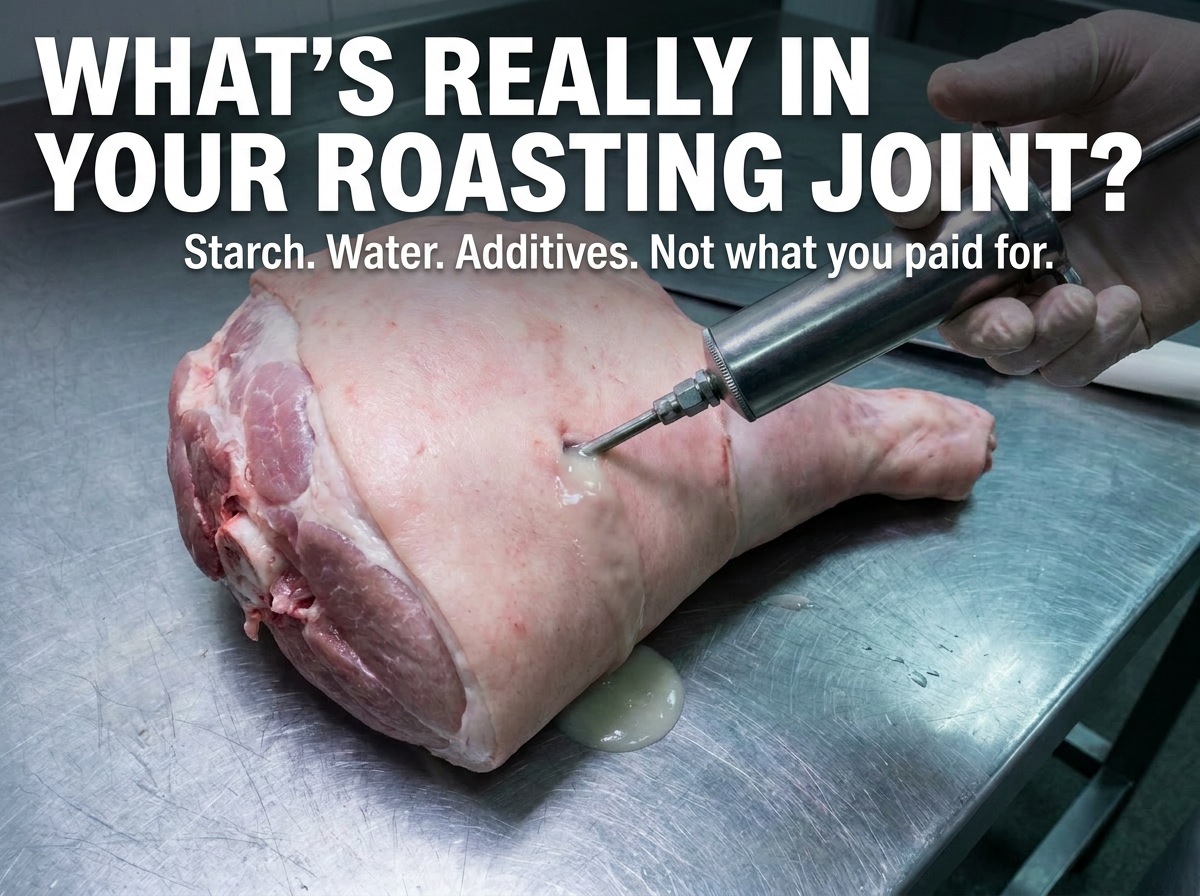
Picture this. You’ve paid a decent price for a roasting joint from the supermarket. It looks good in the packet